The games that shaped No Kings Left
Drakensang Online and Cabal Online are behind many of this game's ideas. What No Kings Left takes from each, and what it leaves behind.
No game starts from nothing. No Kings Left starts from two online action RPGs with long histories: Drakensang Online and Cabal Online. If you played either of them, parts of this game will feel familiar, and that is on purpose.
This post says plainly what is borrowed and what is not. The mechanics below are inspirations. The names, the world, the monsters, the classes and the art of No Kings Left are its own.
From Drakensang Online: the hands and the towns
Drakensang Online showed a lot of players that a proper action RPG could be played with nothing but a mouse and a row of number keys, and that it could look like a real game while being easy to get into.
What No Kings Left takes from it:
- Click to move. You click where you want to go and hold the button to keep moving. Skills sit on the number keys.
- Pointing instead of selecting. A monster under the cursor lights up and shows its name, level and health at the top of the screen. There is nothing to click and nothing to deselect.
- Towns as meeting places. Ordinary settlements where adventurers, merchants and crafters gather, each serving a stretch of the levels.
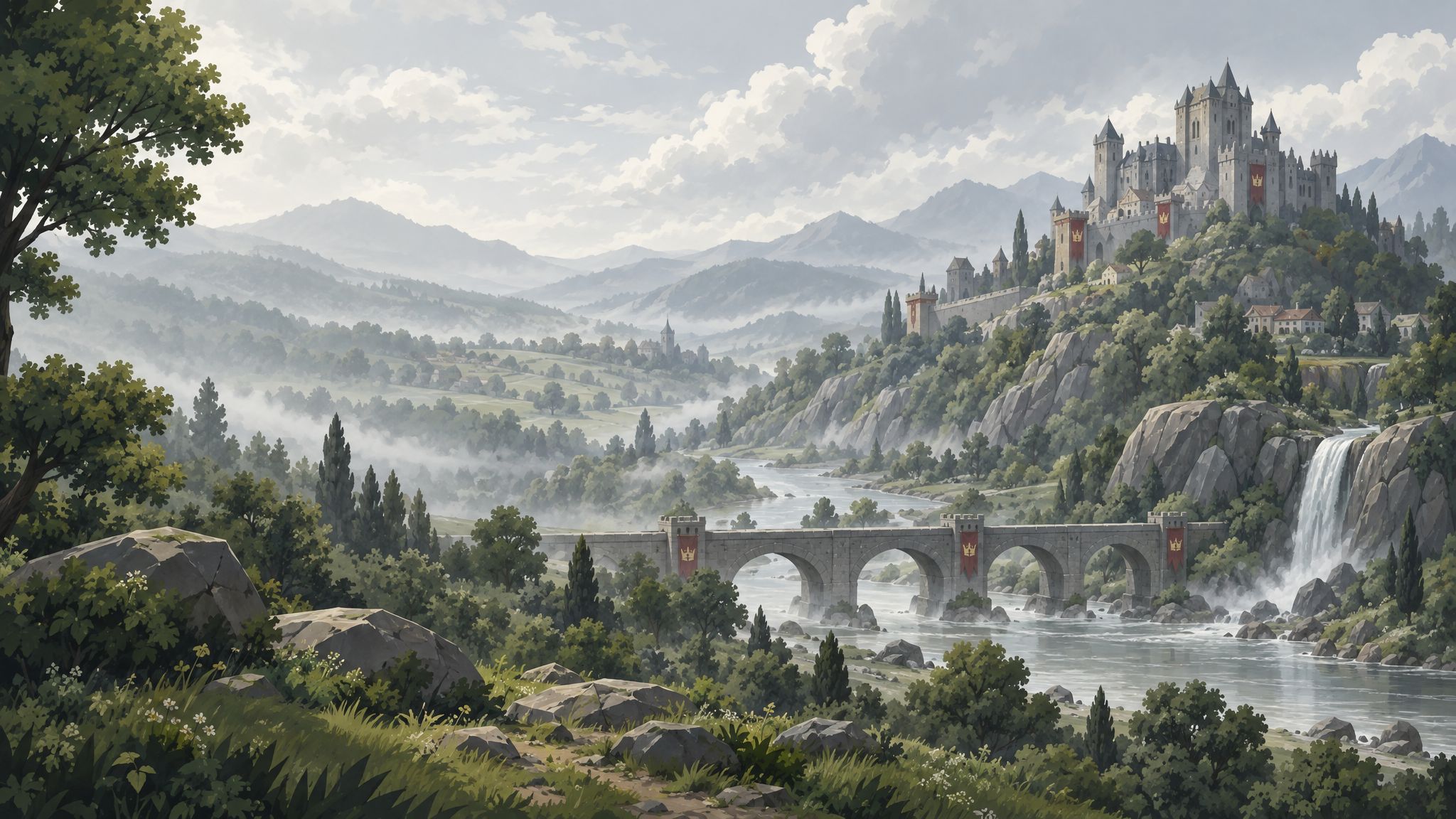
- A clear, readable look. Simple shapes, daylight and a camera above your character, so that a fight with a dozen monsters in it is still easy to read.
From Cabal Online: the dungeons and the gear
Cabal Online is where the structure of the game comes from: what you do in an evening, and what you have to show for it.
What No Kings Left takes from it:
- Short instanced dungeons with a minimum level, a time limit and rewards that depend on how well you cleared them.
- No tank, healer or damage roles. Every class deals damage and looks after itself, so any group works. There is a whole post on why the game has no tank and no healer.
- Gear in tiers named after materials, with a level and a class on every item, and no rarity colours. See Gear without rarity colours.
- Step-by-step upgrades paid with cores that drop in dungeons, where the high steps can fail.
- Timing combos, possibly. They have to pass a test first.
What is left behind
Borrowing from older games also means deciding what not to bring along.
- Grind walls. The level curve rises gently and has no sudden cliff near the cap. The plan is a level cap of 50, reached in roughly 20 to 30 hours, with the long-term game at the cap.
- Upgrades that destroy your item. A failed upgrade here can cost materials or lower the upgrade level. It never destroys the item.
- Buying power. Whatever the price model turns out to be, nothing sold for real money will make a character stronger. Potions cost in-game gold only.
- Daily entry limits. Dungeons can be run as often as you like.
- A download. No Kings Left runs in a browser tab, with nothing to install.
What is new
A list of influences can make a game sound like a tribute act. It is not meant to be one.
The world is its own: the Vaelish Reach, a realm whose kings are being turned into monsters by a curse nobody understands. The four classes, Vanguard, Kingsbane, Ranger and Magus, are designed for this game, with a resource each and skill ranks that let you choose how a skill changes. Crafting covers half of what a character wears, through four professions tied to the classes. And the whole thing is built to run at 60 frames per second on an ordinary laptop, in a tab.
If you loved those games
Then this one is being made with you in mind. It will not be the same game, and it should not be. The aim is the same evening: log in, find a group or go alone, run a dungeon, come out with something better than you went in with.
The roadmap shows how far along that is.